The right to privacy is essential, and it applies to everyone, including migrant workers. In Hong Kong, the law states that foreign domestic helpers (FDHs) have the right to suitable accommodation, which provides reasonable privacy, especially during their rest hours.
Likewise, FDHs also have the right to keep personal property, such as passports, identification cards, and bank cards. Nobody, not their employer or agency, is allowed to withhold their property without consent. Doing so would make these people liable for prosecution under the law.
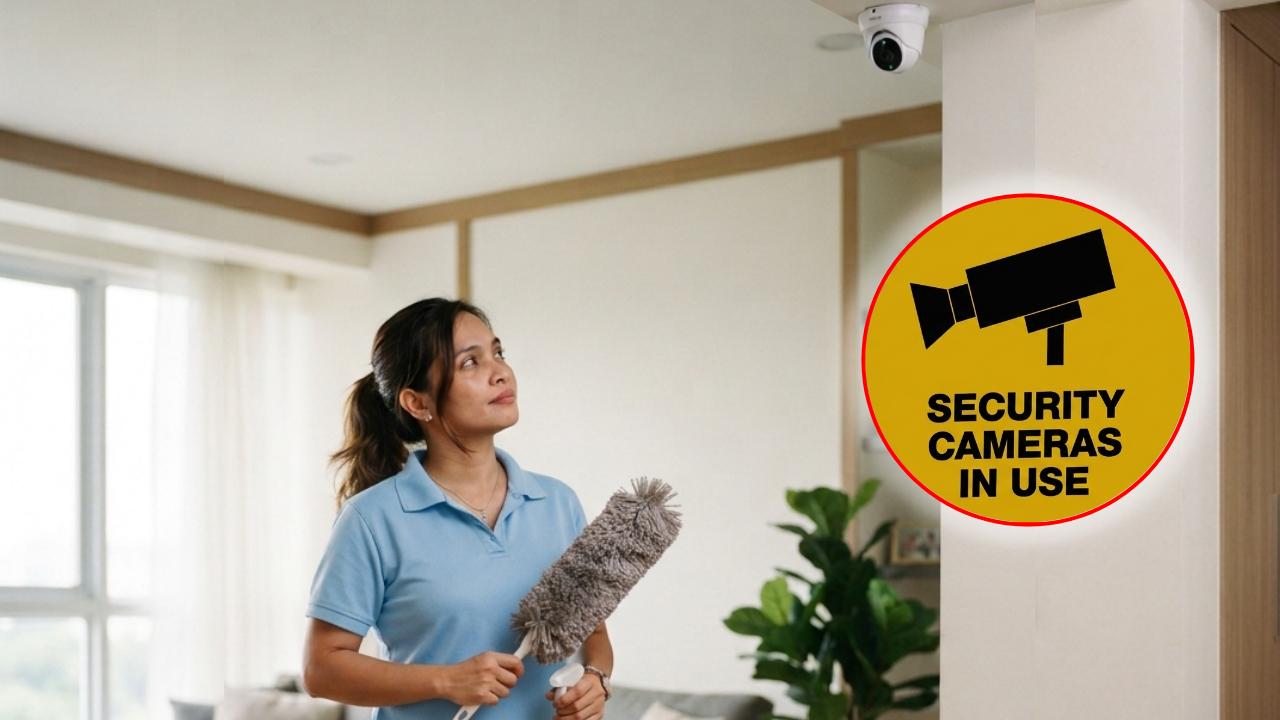
CCTV System for Safety and Monitoring Purposes
The “Handbook for Foreign Domestic Helpers,” published by the Hong Kong Labour Department, cites provisions on the privacy of FDHs. One of these pertains to the use of closed circuit television (CCTV) systems.
Some employers may decide to install CCTV systems at home, for safety as well as security purposes. In particular, families with young kids or elderly members often require careful monitoring and special care.
If the employer decides to set up a CCTV system inside the house, he/she should inform the FDH in advance, either verbally or in writing. To avoid any future disputes, a written document is recommended; it may state something like this: “Please note that video cameras have been installed inside the house for safety and security purposes.”
Making Videos in Private Areas is Prohibited
When installing a CCTV system, video cameras may be placed in “common” areas, such as the living room, kitchen, patio, or balcony. They may also be installed in a child’s nursery, or an elderly person’s bedroom, for safety and monitoring purposes.
However, Hong Kong law states that there are parts of the house where making videos is prohibited. These include bathrooms, toilets, and private areas where FDHs rest or sleep after work. If videos are captured in these areas without the FDH’s knowledge, the employer may have gone against the provisions of the Personal Data Privacy Ordinance (PDPO).
Privacy Commissioner for Personal Data
Hong Kong’s data privacy law is enforced and overseen by the office of the Privacy Commission for Personal Data (PCPD). Established in August 1996, it aims to protect people’s privacy in terms of personal data.
If you have any questions, complaints, or suggestions, you can get in touch with the PCPD through the following contract details:
Address: Unit 1303, 13/F, Dah Sing Financial Centre, 248 Queen’s Road East, Wanchai, Hong Kong
Telephone: +852 2827 2827 (General Hotline) / +852 3423 6666 (Doxxing Hotline)
Email: communications@pcpd.org.hk (General Enquiries) / complaints@pcpd.org.hk (Complaints) / dbn@pcpd.org.hk (Data Breach Notifications)
Although monitoring the performance of FDHs is important, recognizing their right to privacy is also essential. FDHs should be informed about the use of CCTV systems, so that there can be open communication, trust, and respect for privacy, for everyone concerned.
What’s more, FDHs should also take care of their health and well-being. Read this guide to learn more about how you can stay safe and healthy on the job.
Disclaimer: The above guide is featured for general information purposes only, and not intended to replace official statements or professional legal advice. For personal guidance regarding your situation, contact a legal professional or the relevant government authority.