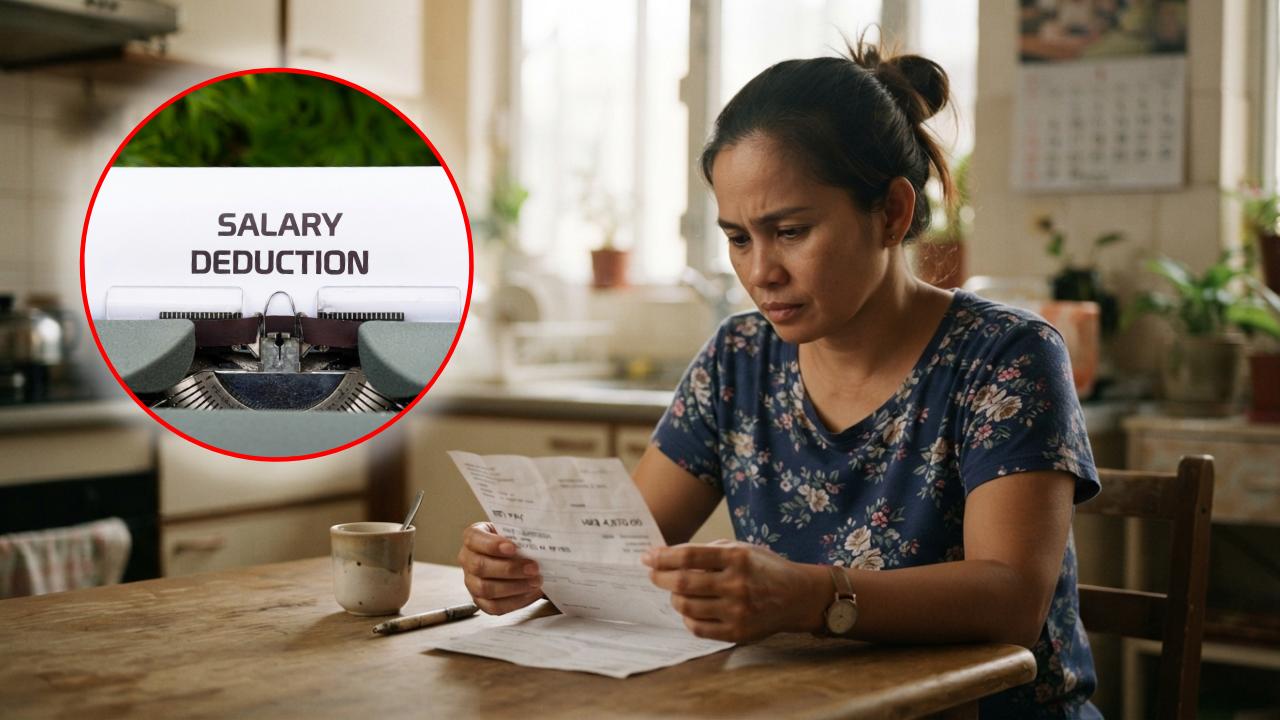
Has your employer ever made deductions from your salary? There are cases where this is legal or permissible, such as when you have lost or damaged a property of the employer. However, there are also situations where salary deduction is considered illegal.
Hong Kong’s Employment Ordinance (EO) states that except under allowable conditions, salary deductions that are arbitrary or punitive are illegal. Doing so could lead to fines and imprisonment, upon conviction.
Allowable or Legal Salary Deductions
Based on “A Handbook for Foreign Domestic Helpers,” a publication of the Hong Kong Labour Department, salary deductions are deemed legal or allowable in the following cases:
- Deduction for loss or damage of the employer’s goods, equipment, or property due to neglect by the foreign domestic helper (FDH). In this situation, the amount to be deducted should be equal to the value of the loss or damage, but not more than HK$ 300. Also, the deduction should not exceed one quarter of the FDH’s salary for that period;
- Deduction for recovering any advanced or overpaid salaries to the FDH. In this case, the deduction should not exceed one quarter of the FDH’s salary for that period;
- Deduction for recovering any loan made by the employer to the FDH, with written consent from the FDH; and
- Deduction for absence from work. The amount to be deducted should be proportional to the period of time the FDH was absent from work.
NOTE: The total of all deductions in one salary period, except for those made due to absence from work, should not exceed one half of the FDH’s salary for that period.
Employment Agency Commission
Meanwhile, if you were hired through an employment agency, make sure that you pay the prescribed commission only after you have received your first monthly salary. This commission should not exceed 10 percent of your first monthly salary.
Aside from the prescribed commission, you do not have to pay the agency for any expenses, such as a reservation fee, registration fee, or photocopy fee. Likewise, be wary of paying the agency through a personal account of its staff, or through a third party.
Illegal Salary Deductions
What makes a salary deduction illegal? Here are some examples:
- Deduction made to pay for the FDH’s medical exam, visa processing, or training course. The employer is responsible for shouldering these costs, in compliance with Hong Kong’s labour law;
- Deduction of more than HK$ 300 for lost or damaged property. As mentioned earlier, the amount should not exceed HK$ 300 in such cases;
- Deduction as penalty or punishment. It is illegal for an employer to make salary deductions due to dissatisfaction with an FDH’s performance, or as punishment for making a mistake; and
- Deduction as charge for lodging or food. The employer is responsible for providing suitable accommodation for the FDH, as well as providing at least three suitable meals a day, free of charge. If food is not provided, a food allowance of HK$ 1,236 per month should be given instead.
Fines and Penalties
An employer who makes an illegal deduction from the salary of an FDH is liable to prosecution, and could face a fine up to HK$ 350,000 and three years imprisonment, upon conviction.
If you’re an FDH and your employer has made unlawful deductions from your salary, do not hesitate to report the matter to authorities. Go to the nearest Labour Relations Divisions office, call FDH Hotline 2157 9537, or send an email to fdh-enquiry@labour.gov.hk. If the employer has made threats, or withheld your personal documents, you can go to the nearest local police station, or contact 999 for emergencies.
Through Hong Kong’s labour law, the rights and welfare of workers, including FDHs, are protected. Now when it comes to termination of contracts, the FDH is entitled to certain benefits, depending on the situation. Read this guide for more details on contract termination and last payment.
Disclaimer: The above details are presented for general knowledge only; they do not constitute formal legal advice. Do not rely on this article alone; rather, verify with a legal professional or the relevant government office.