Foreign domestic helpers (FDH) in Hong Kong are entitled to rest days, holidays, and different types of official leave, including sick leave. Those who have worked for at least one year are also entitled to paid sickness days when they are not able to work because of illness.
The guidelines for sickness leave and allowance are outlined in the Employment Ordinance (EO) of Hong Kong. This ordinance clarifies who may avail of sickness allowance, how many paid sickness days they get, and what happens when an employer fails to provide sickness allowance.
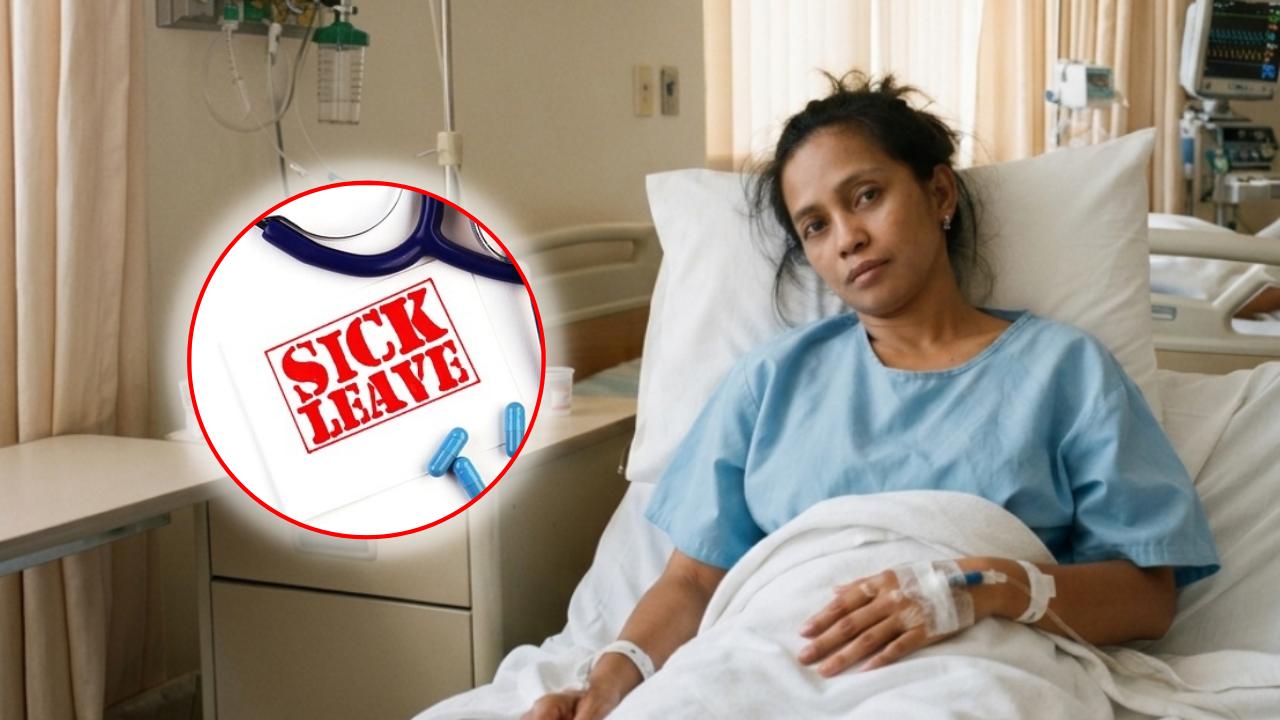
Eligibility for Sickness Allowance
Domestic helpers are entitled to sickness allowance under these circumstances:
- The sick leave taken is not less than four (4) consecutive days;
- The sick leave is justified by a valid medical certificate; and
- The domestic helper has accumulated enough number of paid sickness days.
Who are Not Entitled to Sickness Allowance?
On the other hand, a domestic helper shall not be entitled to sickness allowance in the following cases:
- The worker, without reasonable excuse, refuses treatment by a company doctor of a medical scheme recognised by the Director of Health, or disregards the advice of the doctor;
- The sickness day falls on a statutory holiday, during which the worker is entitled to holiday pay; or
- The illness is covered under the Employees’ Compensation Ordinance.
NOTE: The Employees’ Compensation Ordinance covers work injuries or occupational diseases. In such cases, employees are paid through work injury compensation instead of a regular sickness allowance.
Sickness Allowance and Paid Sickness Days
The amount of sickness allowance is equal to four-fifths of the domestic helper’s average daily wage. It is given not later than the normal pay day.
As for the number of paid sickness days, this depends on the worker’s length of service, as follows:
- Two (2) paid sickness days for each completed month during the first 12 months of employment; or
- Four (4) paid sickness days for each completed month for those who have worked for more than 12 months.
NOTE: Workers can accumulate paid sickness days throughout the entire employment period, but these must not exceed 120 days at any one time.
Moreover, the employer shall keep a record of all paid sickness days accumulated by each employee, the actual number of paid sickness days taken, and the amount of sickness allowance given to the workers. These records should be signed by the employee after returning from sick leave.
Two Types of Paid Sickness Days
There are two types or categories of sickness days, each with its own set of required supporting documents, and differing number of days:
Category 1
A total of 36 paid sickness days may be accumulated in the first category. To be eligible, a worker must provide:
- A medical certificate for general illness or injury, signed by a registered doctor, a registered Chinese medicine practitioner, or a dentist;
- A certificate of attendance for pregnancy-related check-ups, issued by a registered doctor, a registered Chinese medicine practitioner, a registered midwife, or a registered nurse; or
- Proof of an order (e.g. SMS, electronic notice, official document) requiring a worker to undergo mandatory quarantine or isolation as part of anti-epidemic measures.
Category 2
In case the worker has used up all 36 days of Category 1 sickness days, he/she may start using Category 2, which can be up to 84 additional days. This requires additional supporting documents:
- In addition to a medical certificate, a medical summary describing the worker’s laboratory tests and treatment in a hospital (in-patient or out-patient) should also be provided;
- A certificate of attendance for pregnancy-related check-ups in a hospital (in-patient or out-patient), issued by a registered doctor, a registered Chinese medicine practitioner, a registered midwife, or a registered nurse; or
- Proof of an order (e.g. text message, electronic notice, official document) requiring a worker to undergo quarantine or isolation as part of mandatory anti-epidemic measures implemented by the government.
Violations and Penalties
If an employer, without reasonable excuse, fails to pay sickness allowance to a worker, he/she is liable to prosecution and could face a fine of HK$ 50,000 upon conviction.
Moreover, if an employer terminates the contract of a worker who is on sick leave, he/she is liable to prosecution and could face a fine of HK$ 100,000 upon conviction. The employer must also pay the following to the dismissed worker within seven (7) days after the termination date: payment in lieu of notice; seven day’s extra wages as compensation; and any unpaid sickness allowance that the worker is entitled to receive.
NOTE: The above penalty does not apply to cases where a worker was summarily dismissed due to serious misconduct.
The above provisions were included in the Employment Ordinance to protect workers’ rights and well-being, and also to set clear guidelines for both parties, in cases of illness or injury. Meanwhile, for those who are pregnant, read this guide about workers’ maternity leave benefits.
DISCLAIMER: The above guide is presented for information-sharing purposes only. It should not be used as basis for making a legal action or decision. Rather, a legal professional or the relevant governing authority must be consulted. For more details, read the Concise Guide to Employment Ordinance, published by the Hong Kong Labour Department.